Explore Igor Shulman’s 2011 archive of original oil and chalk artworks. This year features expressive figurative paintings, ballet-inspired compositions, and intimate nudes, each capturing mood, form and the artist’s evolving mastery of realism and expressionism.
2011 Archive of Original Oil Paintings
Discover Igor Shulman’s 2011 collection of sold and limited edition works, including figurative, ballet, and erotic series, highlighting his unique approach to form, color and atmosphere.
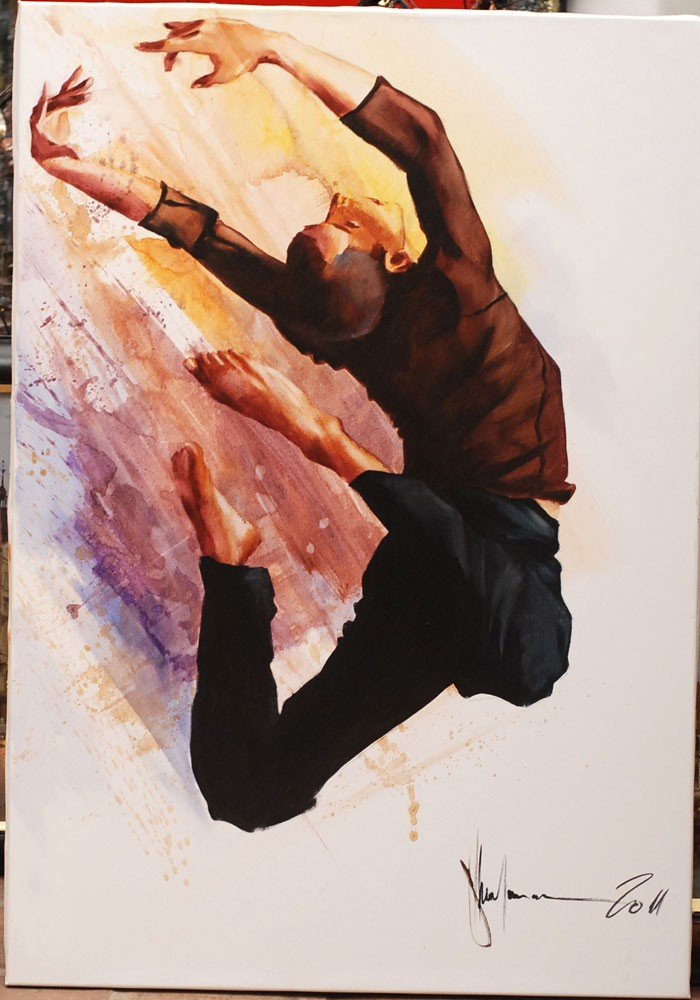
Billy Eliot presents a male figure caught in the middle of a dynamic leap, suspended above the ground in a pose reminiscent of contemporary dance or ballet. The figure is turned slightly away from the viewer, with his head tilted upward and his arms extended outwards and upwards. His legs are bent at the knees, and his bare feet emphasize the physical, unadorned nature of the movement. He wears a loose-fitting, dark brown long-sleeved top and black trousers, which absorb the light and contrast with the bright space surrounding him.
The composition is built around a strong diagonal axis. The figure's body cuts across the canvas from the lower left toward the upper right, reinforcing the upward energy of the jump. The background is deliberately abstract and atmospheric, composed of broad, overlapping strokes of yellow, ochre, warm orange and pale violet. Splatters and drips of paint are visible across the surface, adding a sense of immediacy and raw energy to the scene. There is no specific architectural or environmental setting; instead, the background functions as a luminous, weightless field that supports the figure's motion.
Shulman combines solid, carefully observed anatomy with a much freer treatment of the surrounding space. The figure is painted with a degree of realism—the musculature, the folds of the clothing and the position of the limbs are all clearly defined—while the background is handled with expressive, almost watercolour-like looseness. This contrast between the grounded physicality of the body and the ethereal, abstract space around it is central to the painting's impact.
The title Billy Eliot evokes the well-known story of a young man pursuing dance against the expectations of his environment. However, the painting does not rely on a literal narrative. Instead, it isolates a single moment of flight, vulnerability and self-expression. The bare feet, the outstretched hands and the upward gaze suggest a moment of both physical exertion and emotional release. The warm, glowing palette gives the scene a hopeful, energetic atmosphere, while the visible brushwork keeps the image feeling immediate and alive.
As with many of Shulman's works, Billy Eliot places a recognizable human figure within a simplified, expressive environment, allowing the gesture and the light to carry the emotional weight of the composition.
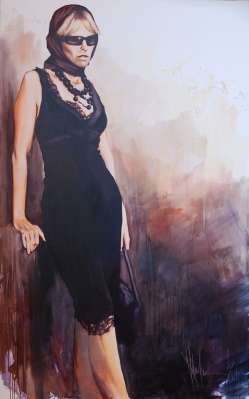
Garik Sukochev 39.37 W x 39.37 H in / 100 x 100 cm The Absinth №6 39.37 W x 39.37 H in / 100 x 100 cmThe Absinth №8 47.24 W x 35.43 H in / 120 x 90 cmThe Wite Walls 39.37 W x 39.37 H in / 100 x 100 cmWidow 39.37 W x 59.05 H in / 100 x 150 cm
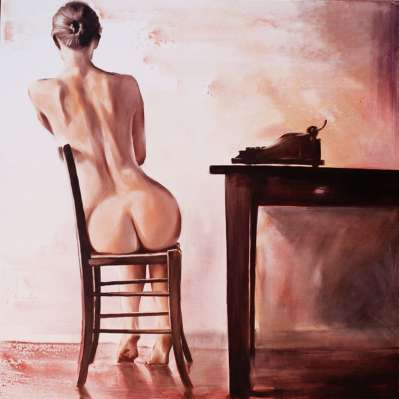
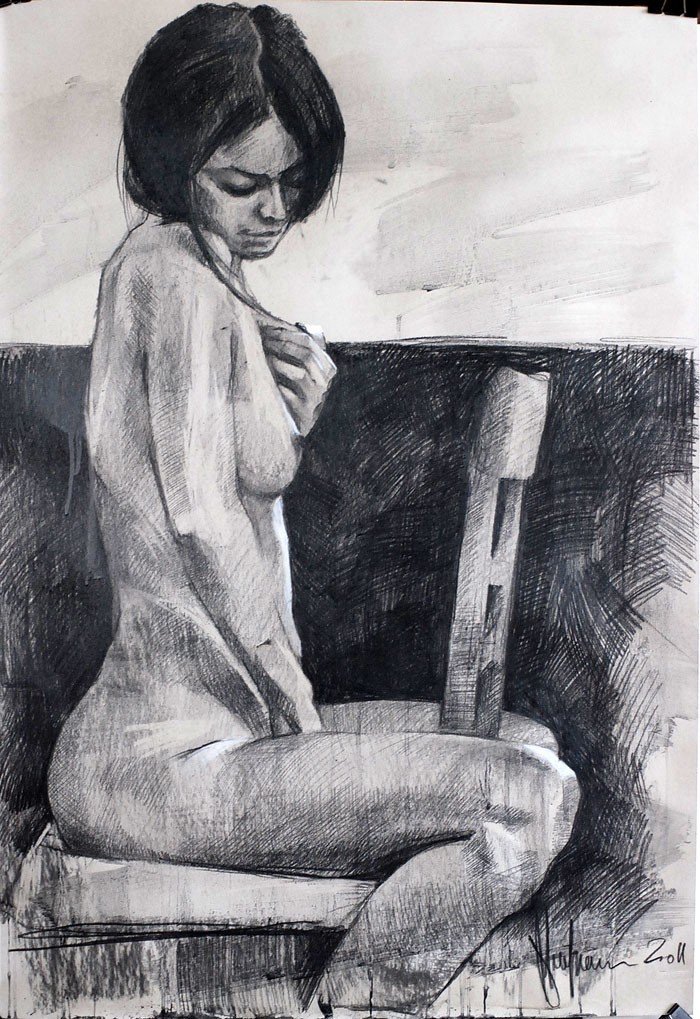
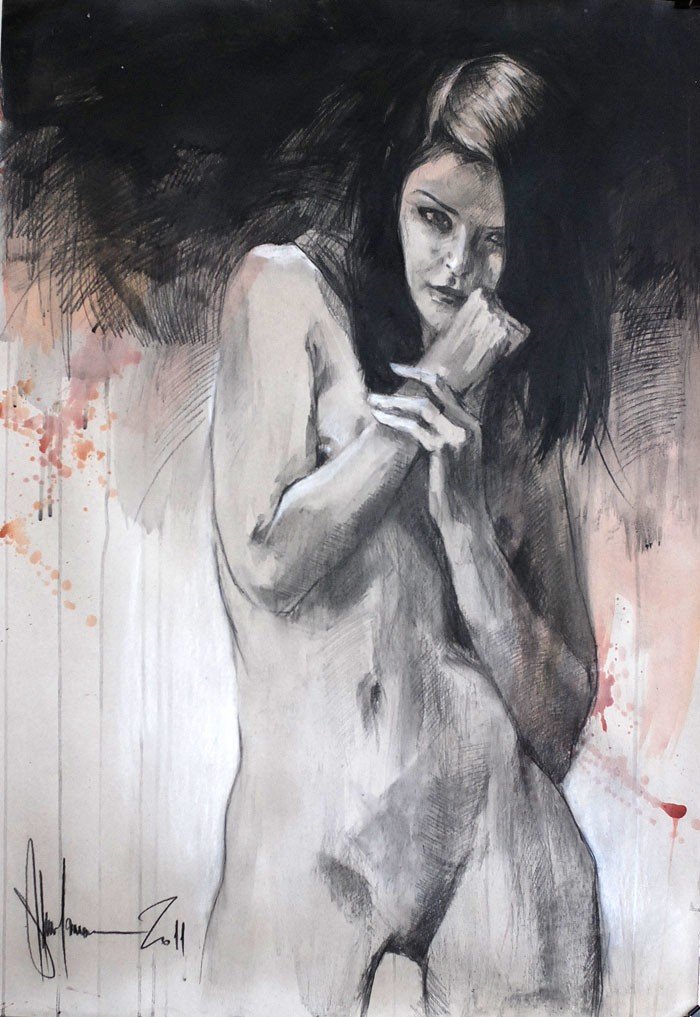
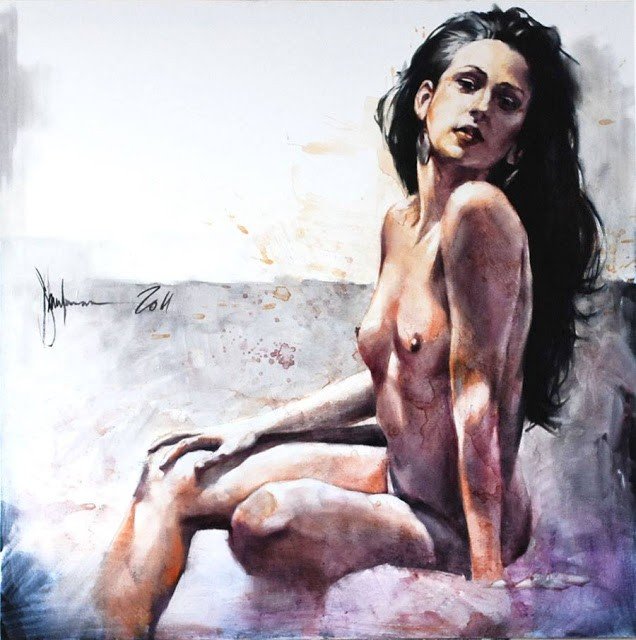
Lolita 39.37 W x 39.37 H in / 100 x 100 cmIntimate 39.37 W x 39.37 H in / 100 x 100 cmPoetry 27.56 W x 27.56 H in / 70 x 70 cmSecretary №2 39.37 W x 39.37 H in / 100 x 100 cmThe Akt 35.43 W x 47.24 H in / 90 x 120 cmThe Akt №43 35.43 W x 23.62 H in / 120 x 60 cmThe New Life 27.56 W x 39.37 H in / 70 x 100 cmEvelin 42.52 W x 35.43 H in / 108 x 90 cm Located at Canterbury Auction Galleries, United Kingdom and lot #303 on auction mutualart.comNude# 273. Chalk on Paper 27.6 W x 39.37 H in / 70 x 100 cmNude #338. Chalk, Charcoal, Graphite on Paper 27.6 W x 39.37 H in / 70 x 100 cmNude #341. Chalk, Charcoal, Graphite on Paper 27.6 W x 39.37 H in / 70 x 100 cm
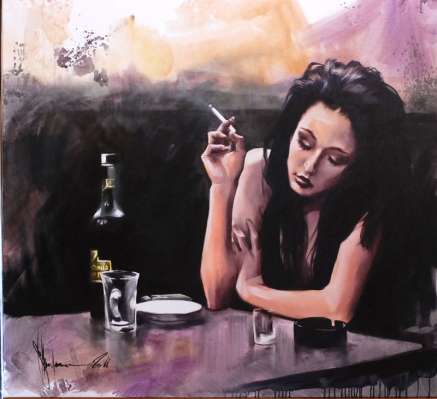
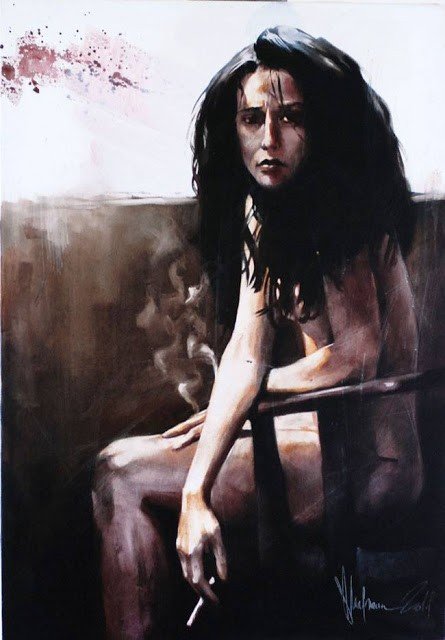
Tired 27.56 W x 39.37 H in / 70 x 100 cm Alternative painting name is Woman with cigarete (Erotic series)
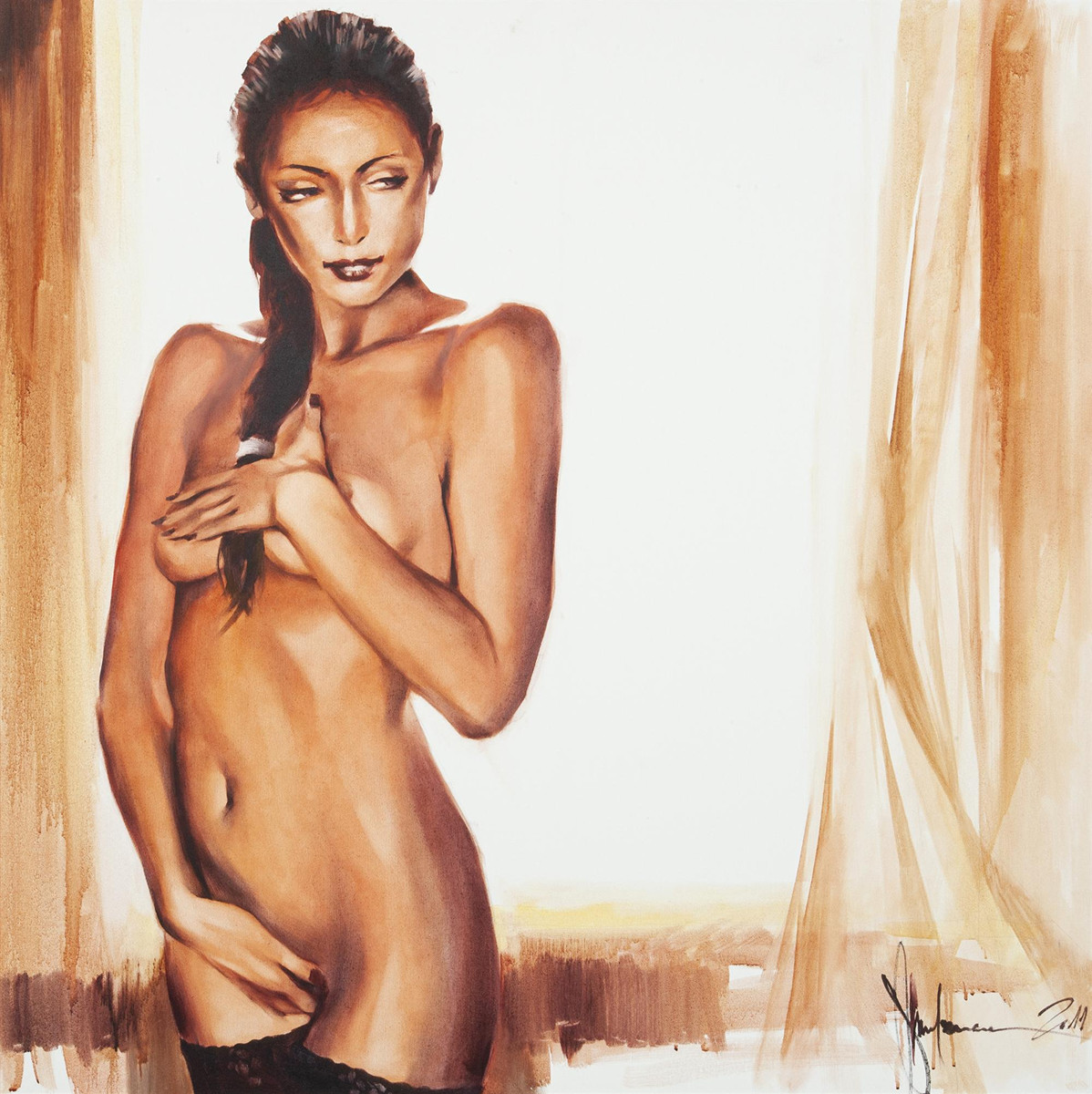
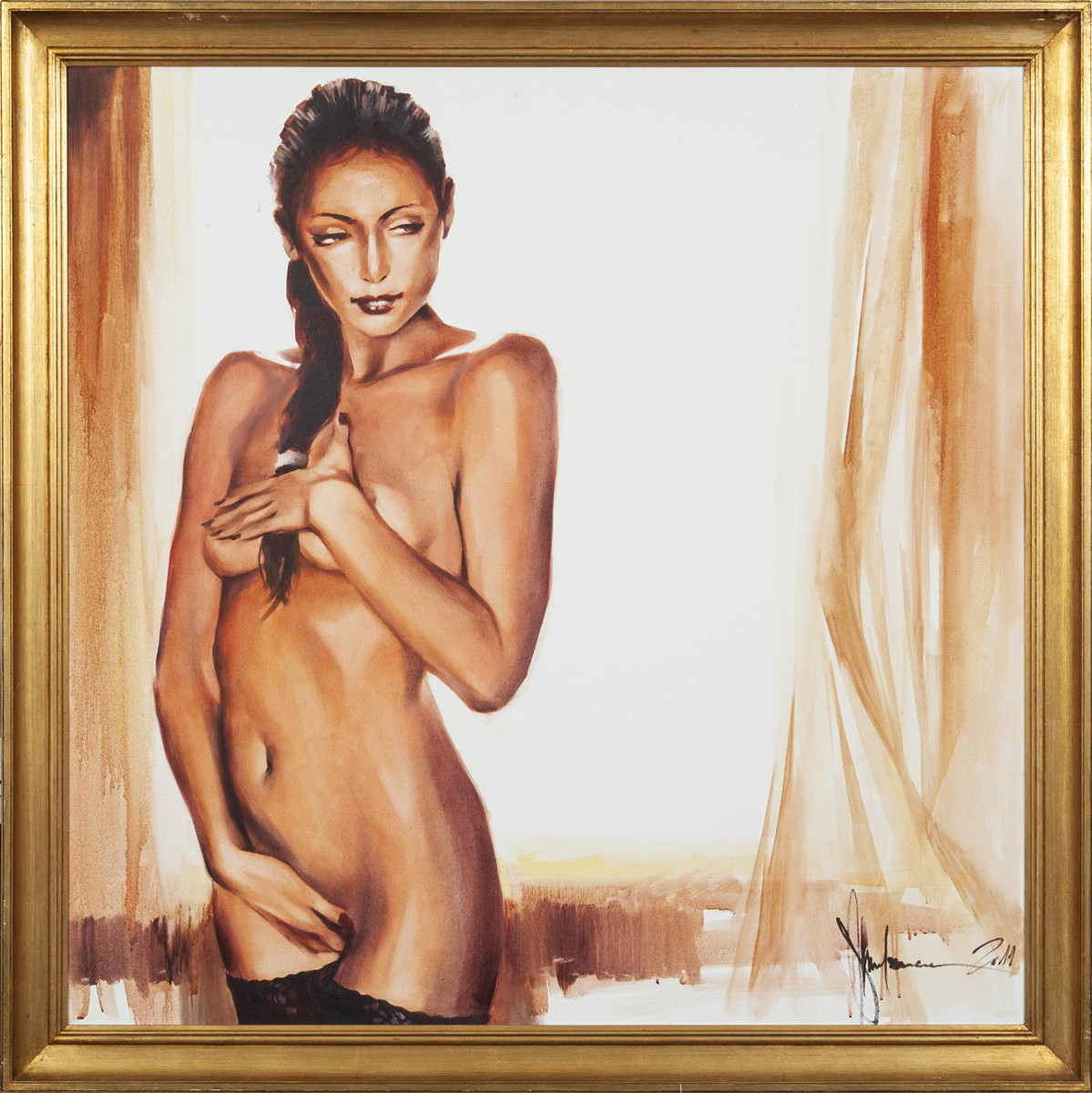
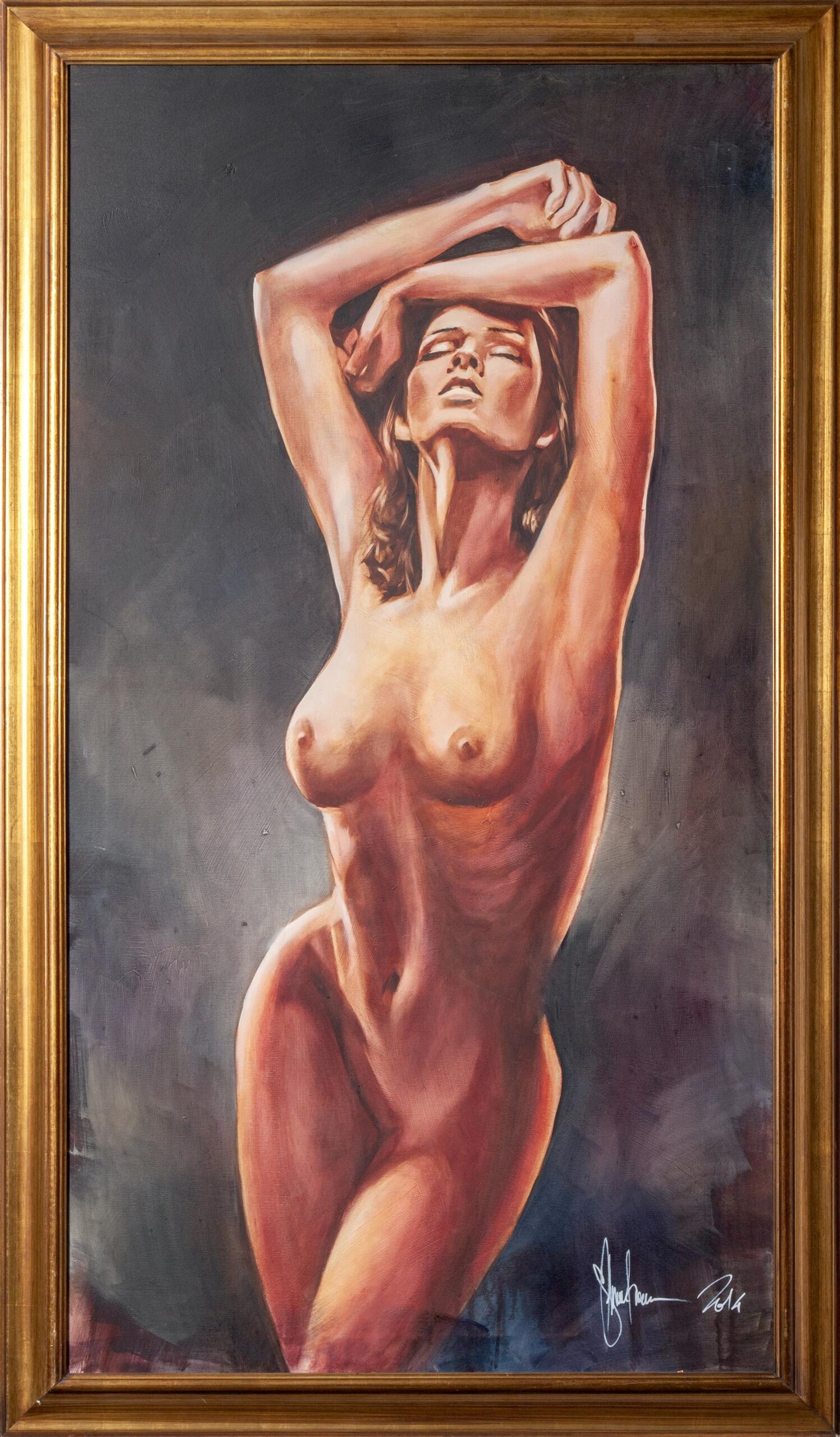
Akt #39 39.37 x 39.37 in / 100 x 100 cmAkt #39 (Framed) 39.37 x 39.37 in / 100 x 100 cm
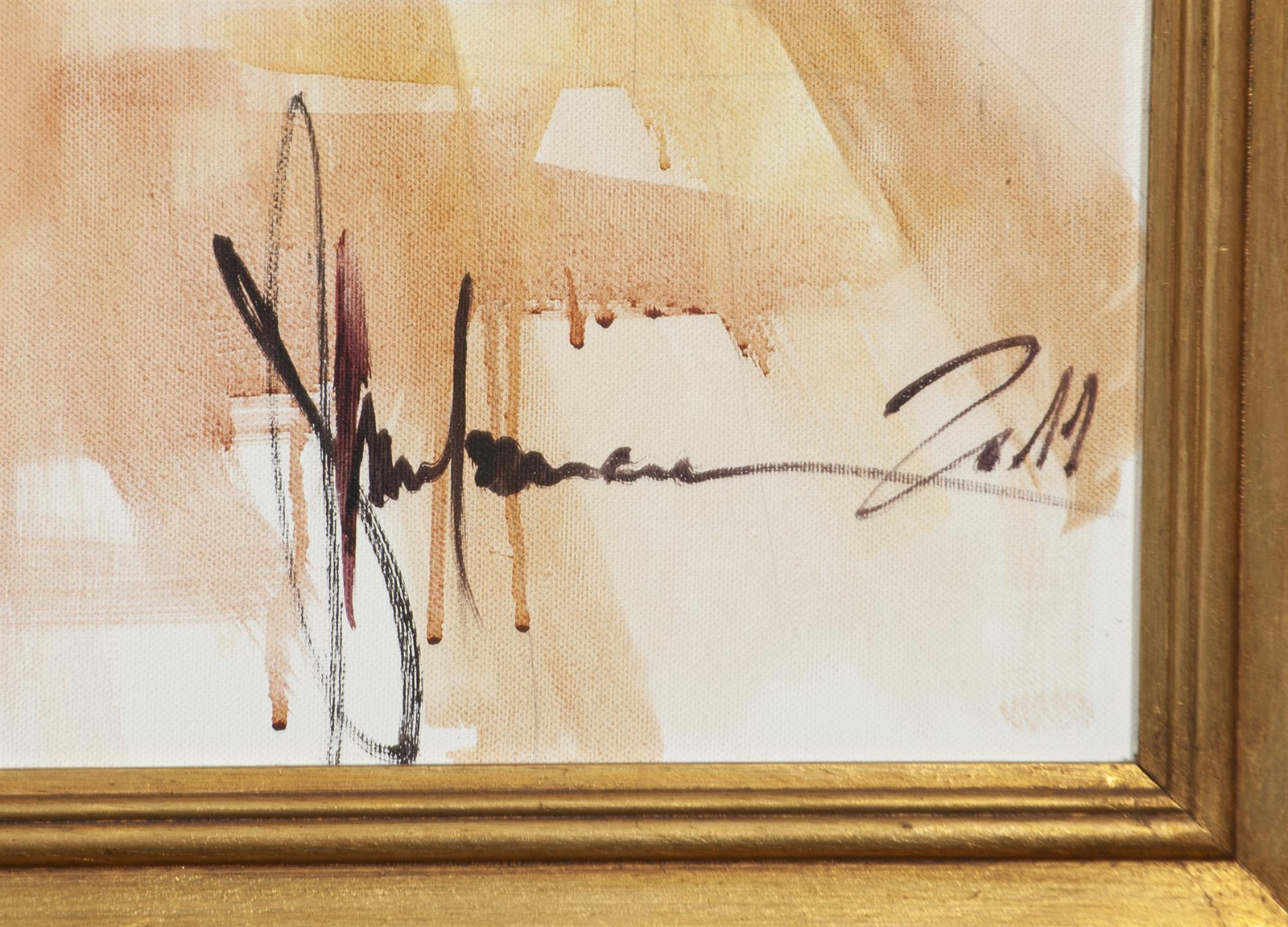
Akt #39 (In Details) 39.37 x 39.37 in / 100 x 100 cm
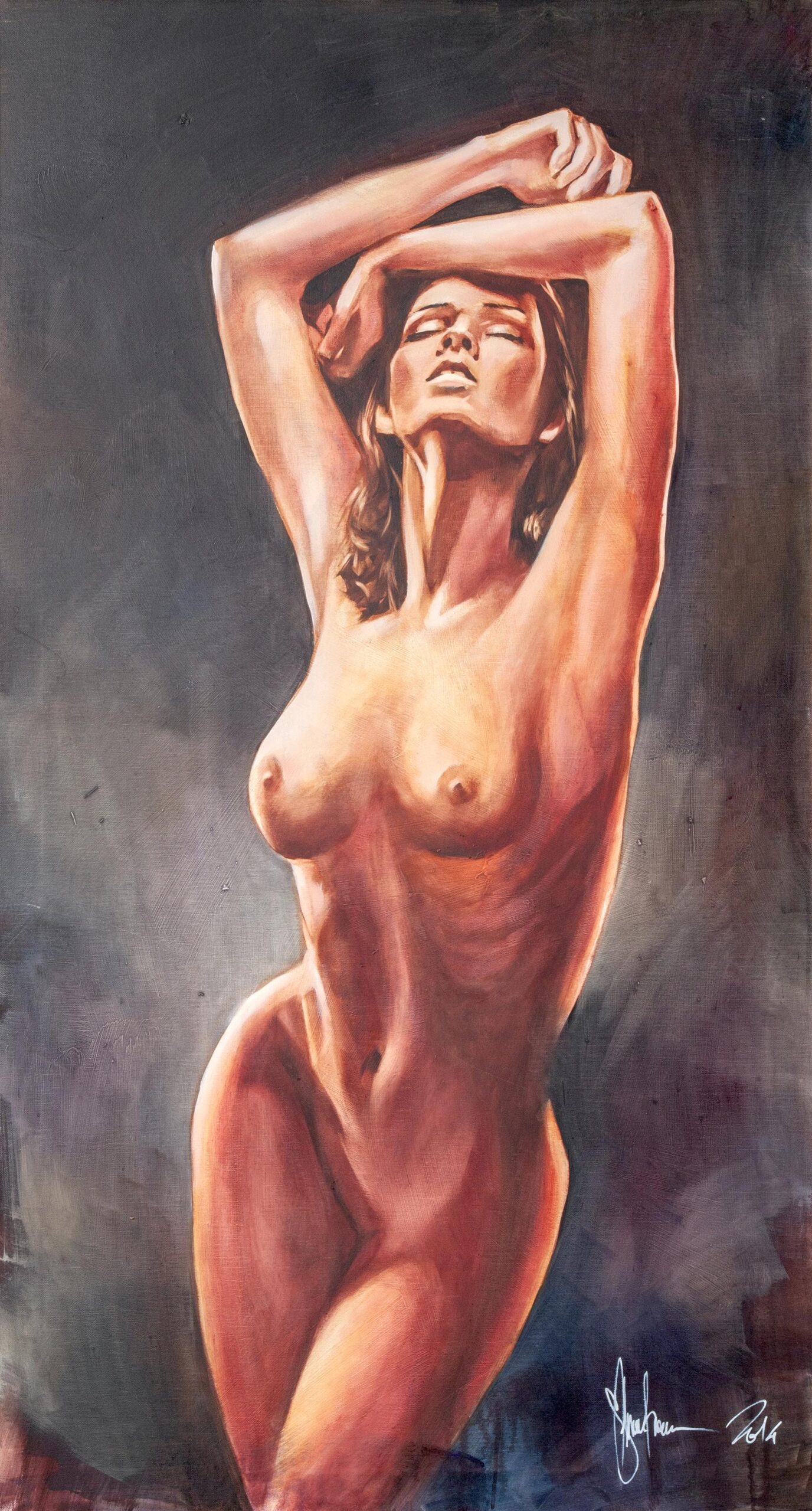
Akt #130 130 x 70 cm
Akt #130 (Framed) 130 x 70 cm
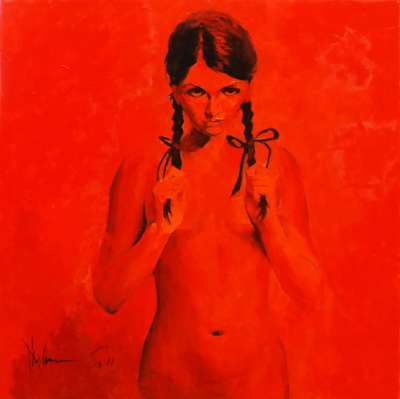
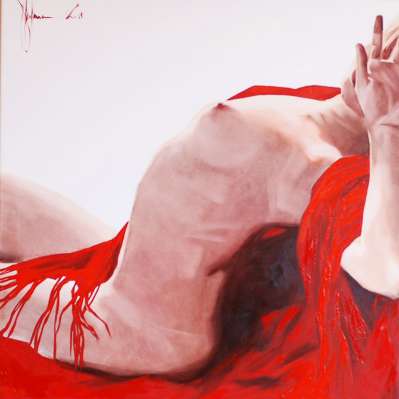
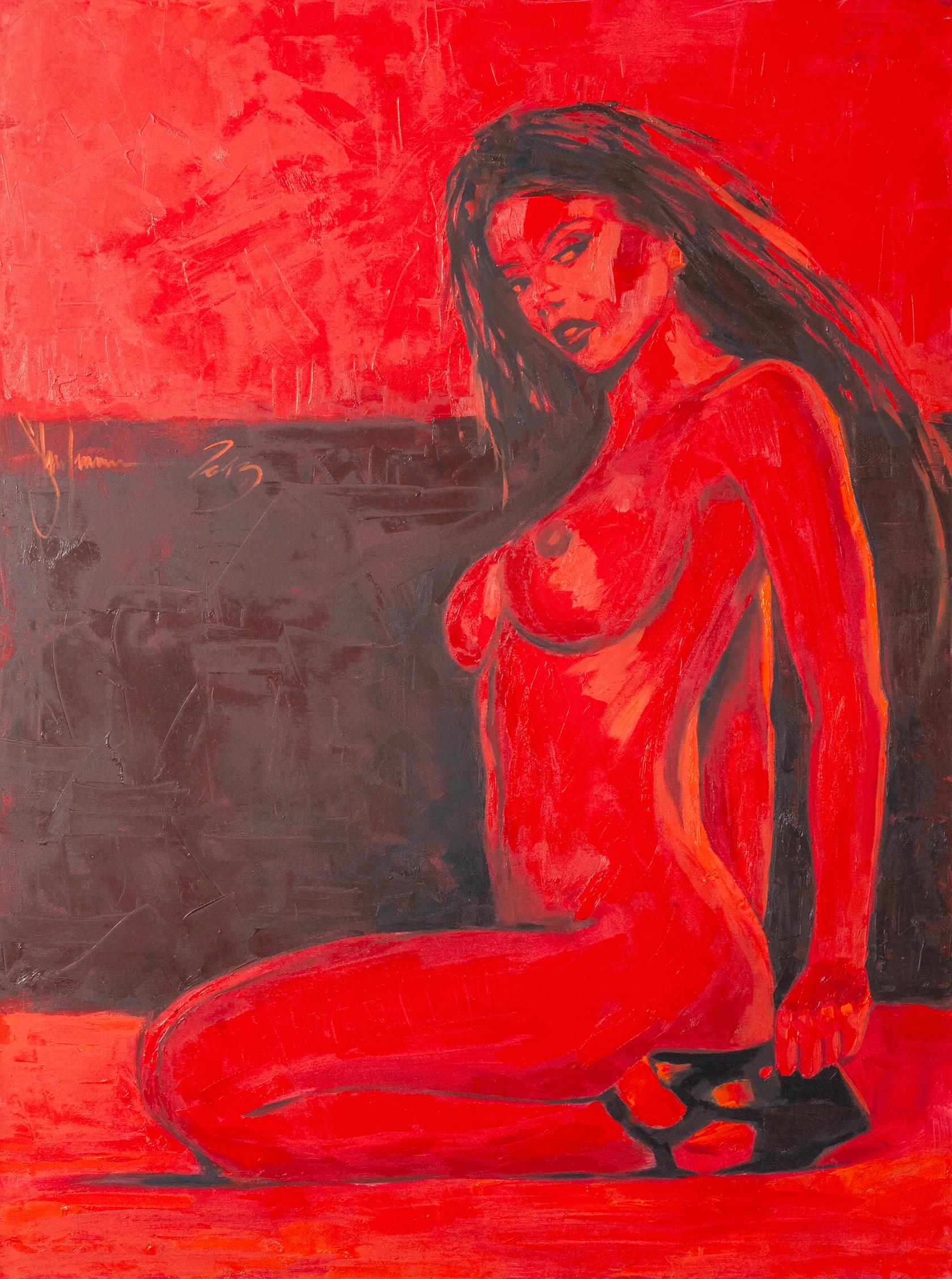
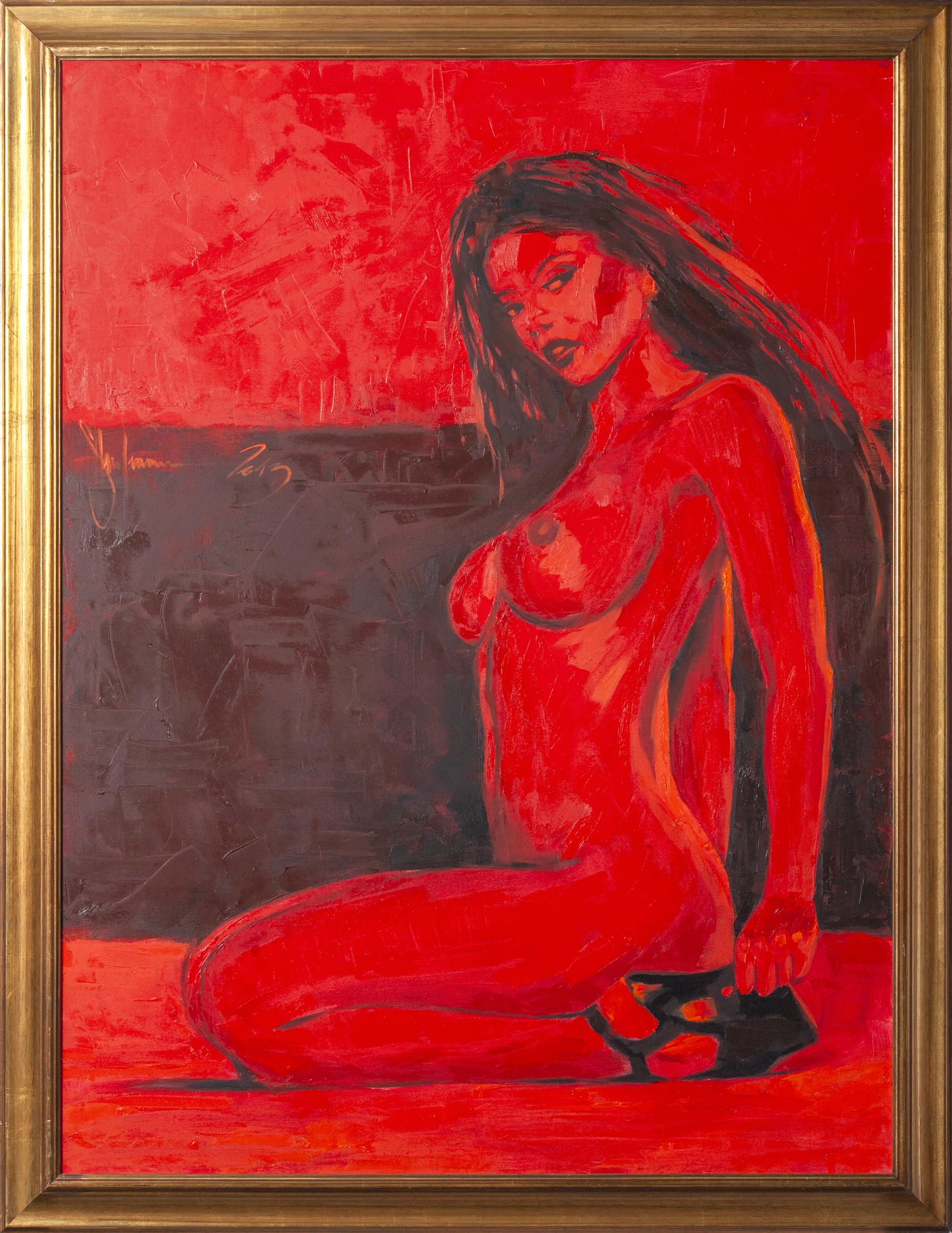
Červený Akt located at Galerie Art Praha 120 x 90 cm
Framed Červený Akt located at Galerie Art Praha 120 x 90 cm
***
ℹ
Subject: People and Portraits, Women, Nudes and Erotic, Transportation
Style: Realism
Themes: Nude Woman, Sports Car, Contrast of Flesh and Metal, Vulnerability, Consumerism, Objectification, Isolation, Modern Life, Female Beauty, Mystery, Human vs Machine, Materialism, Figurative Realism
⧉
Curves in Tune
39.37 H x 47.24 W x 1.97″ x / 100 H x 120 W x 5 cm
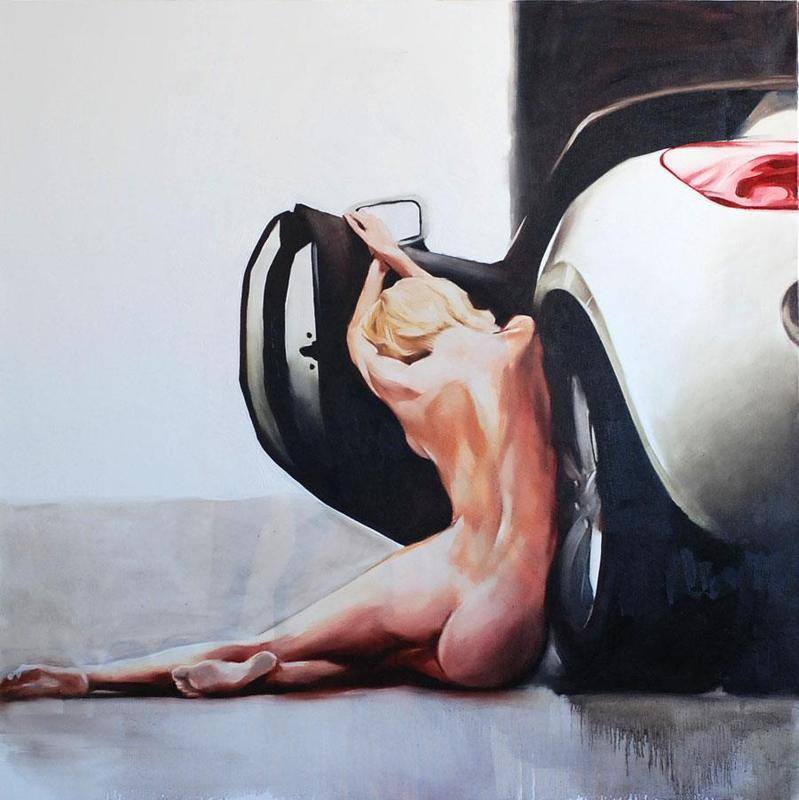
In Curves in Tune (2011), Igor Shulman juxtaposes human fragility with the polished surface of modern luxury. A nude woman sits with her back to the viewer, leaning against the open door of a white sports car. Her skin radiates warmth, its softness heightened by the sharp lines and cold sheen of the machine. The figure’s posture—arms resting on the car door, body turned slightly away—suggests both dependence and distance, as though caught in a moment of reflection or surrender.
The setting is pared down to essentials, with muted neutral tones that keep attention fixed on the interaction between body and object. By leaving the woman’s face unseen, Shulman introduces a note of mystery, encouraging viewers to project their own interpretations onto the scene.
Executed in oil, the work embodies Shulman’s figurative realism while retaining expressive brushwork. The contours of the body are carefully modeled, contrasting with the harder surfaces of the car. This interplay of textures reinforces the central tension between the organic and the mechanical. Light falls evenly across the canvas, sculpting form without dramatization, creating a calm yet unsettling atmosphere.
The mood is contemplative, tinged with vulnerability. While the sports car suggests wealth, power, and material desire, the nude figure introduces fragility and exposure. Together, they form a dialogue about modern life—where intimacy and identity can become entangled with possessions and surfaces. Themes of objectification, consumerism, and solitude unfold quietly, without spectacle, leaving the viewer to consider the relationship between human presence and material aspiration.
This original oil painting is a striking example of Shulman’s ability to blend erotic presence with philosophical depth.
ℹ
Subject: People and Portraits, Women, Nudes and Erotic
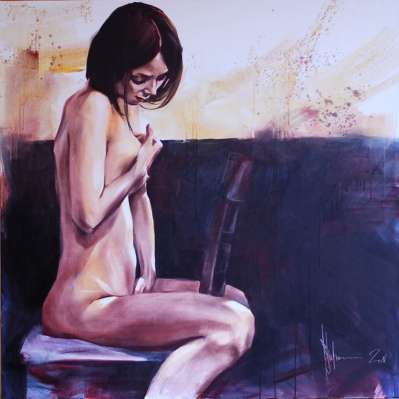
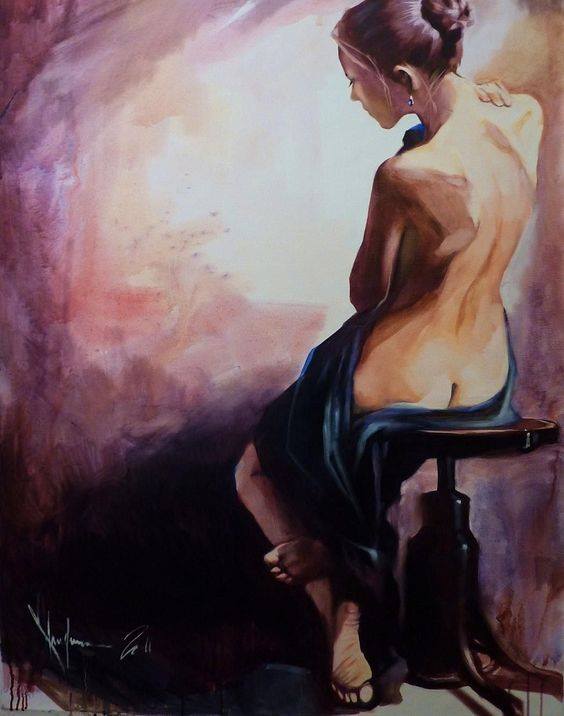
This original oil painting by Igor Shulman presents a nude woman seated on a simple dark stool, captured in a private moment of introspection. Her back is partially turned, revealing gentle curves and warm ochre-toned skin, contrasted by a dark blue drape that suggests modesty while still embracing the natural form. Her hair is pulled into a neat bun, with a small earring visible, lending subtle detail to the figure’s quiet elegance. The stool is solid and unadorned, grounding the composition while emphasizing the figure’s contemplative posture.
The background is an undefined interior space, softly illuminated and rendered in hazy purples, pinks, and muted browns. The diffuse light highlights the contours of her body without harsh shadows, creating a sense of intimacy and calm. The painterly texture of the background and the smooth rendering of the figure balance realism with a delicate abstraction, drawing attention to the emotional resonance of the scene.
Shulman’s style combines figurative realism with expressive brushwork, allowing the figure to feel tangible while the surroundings maintain a dreamlike quality. The mood is introspective, contemplative, and slightly melancholic, suggesting a private engagement with one’s inner thoughts.
The painting’s symbolism emphasizes vulnerability and the nuanced tension between exposure and concealment. The figure embodies introspection and emotional depth, inviting viewers into a quiet, personal moment that balances self-awareness with privacy.
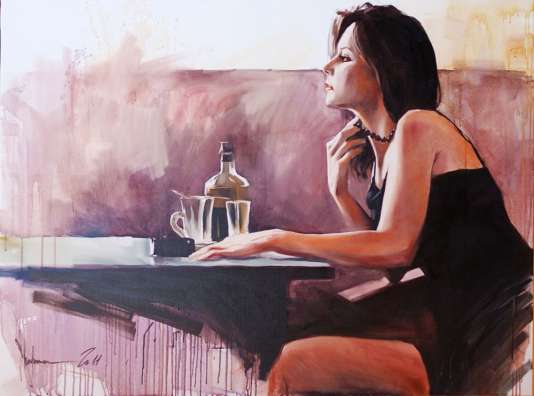
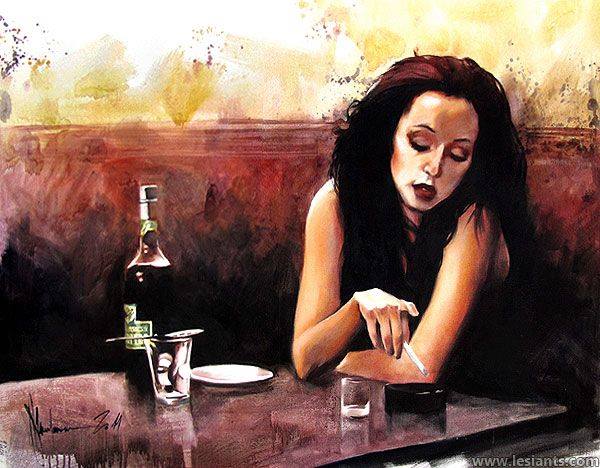
Untitled (The Absinth #7) by Igor Shulman captures a solitary moment of quiet reflection in a dimly lit bar. A young woman with long dark hair sits alone at a small table, her posture slumped and her gaze directed downward. A half-empty glass and a nearly empty bottle of liquor rest in front of her, while a lit cigarette adds a faint trace of smoke to the atmosphere. Her pale skin contrasts softly with her dark hair, enhancing the introspective quality of the scene.
The setting is a small bar or café, suggested through dark brown wood paneling and muted ochre and brown tones. The light is soft and diffuse, casting gentle shadows that reinforce the painting’s subdued mood. Textures are blended with painterly brushstrokes, creating a softness that emphasizes atmosphere over detail.
Shulman’s style combines figurative realism with subtle impressionistic influences. The oil medium allows for smooth blending of tones and visible brushwork, capturing emotional nuance rather than precise photorealism. Muted, earthy colors maintain a somber and intimate tone.
The mood is quiet, melancholic, and introspective. The woman’s posture, the dim lighting, and the presence of alcohol and cigarette suggest a private moment of contemplation, carrying hints of loneliness or reflection on personal struggles. Symbolically, the scene explores solitude, emotional burden, and coping mechanisms, while the bar environment reinforces the narrative of isolation.
ℹ
Subject: People and Portraits, Women
Style: Expressive and Gestural, Realism
Medium: Oil on Canvas
Themes: Woman, Female Figure, Figure from Behind, Wall, Solitude, Contemporary Woman, White Dress, Minimalism, Negative Space, Expressive Painting, Figurative Art, Atmospheric Painting, Contemporary Figurative Painting, Expressive Realism, Minimalist Figurative Art
⧉
At the Wall
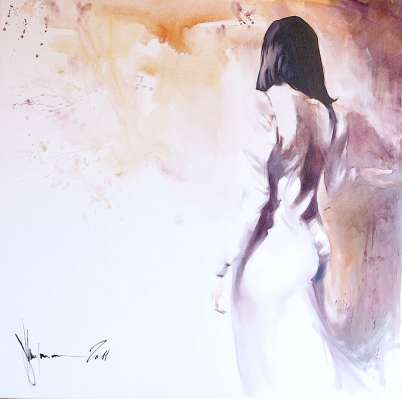
At the Wall is an expressive figurative painting by Igor Shulman, created in 2011. The composition shows a solitary woman standing close to a wall, seen from behind and slightly from the side. Her figure occupies the right portion of the canvas, while a large expanse of pale, almost empty space extends across the left side.
The woman's dark hair falls straight to her shoulders, concealing most of her face. She wears a light, loose-fitting garment that blends visually with the pale surroundings. Her body is rendered with economical, confident strokes: the contours of her shoulders, back, arms and waist emerge gradually from the surrounding whites and muted tones. One arm hangs naturally at her side, while the other is partially obscured by the body.
The wall behind her is not described as a conventional architectural surface. Instead, Shulman builds it through translucent washes of warm ochre, dusty rose, pale brown and violet. These colors appear to bleed and dissolve into one another, with irregular marks, splashes and exposed areas of the underlying surface adding to the sense of an unfinished or weathered environment.
A particularly important feature of the composition is the balance between the detailed figure and the large areas of near-white space. The woman seems to emerge from the empty field rather than simply stand against a clearly defined background. This restrained approach gives the painting a quiet, contemplative quality.
Shulman's technique combines figurative observation with loose, fluid applications of paint. The woman's body is suggested through subtle changes in tone rather than hard outlines, while parts of the white clothing almost disappear into the surrounding surface. The result is a painting in which presence and absence become equally important visual elements.
The title At the Wall remains deliberately simple and direct. There is no elaborate narrative imposed on the scene: the viewer is presented with a quiet moment, a figure, a wall and an unusual amount of surrounding space. This simplicity allows the painterly qualities of the work—the delicate washes, restrained palette and dissolving contours—to carry much of its atmosphere.
Some archived artworks may be available as prints upon request.
Learn more.