Art Gallery, 2007 – Archive
Viewed:
A curated selection of Igor Shulman’s original oil paintings from 2007, showcasing figurative and realism masterpieces.
2007 Archive of Original Oil Paintings
This collection presents the diversity of Igor Shulman’s work in 2007, featuring both sold and available pieces in original oil.
Browse All Available Oil Paintings
View the full oil paintings catalogue
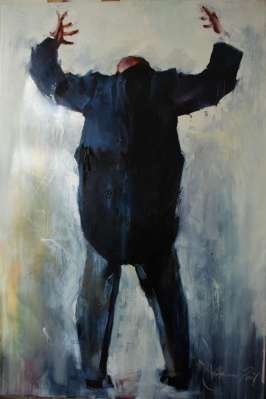
The Music
47.24 H x 35.43 W x 1.97″ x / 120 H x 90 W x 5 cm
In The Music by Igor Shulman, a headless figure stands at the center of the canvas, arms raised as if caught in a silent performance. The man’s dark suit, slightly oversized, anchors him in the ordinary world of business and duty — yet the absence of his head transforms him into something symbolic, almost spectral. His hands, open and lifted toward invisible heights, evoke surrender, prayer, or perhaps a desperate attempt to reach an unseen rhythm.
The setting dissolves into a haze of pale grays and muted whites, with subtle traces of blue and yellow breaking through like notes of a faint melody. There is no clear horizon, no solid ground — only the figure suspended in a moment of tension and release. This ambiguous environment heightens the sense of vulnerability and detachment.
Shulman’s brushwork is expressive and intuitive, alternating between thick, tactile strokes in the suit and softer transitions in the background. His technique reveals a sensitivity to human emotion that defines his figurative style — realism in gesture, abstraction in feeling.
The painting’s mood oscillates between melancholy and reflection. It feels both intimate and universal, a portrait of every person caught between structure and chaos. The missing head becomes a metaphor for the loss of individuality in a world ruled by noise, authority, and repetition — a reminder that the “music” we follow is not always our own.
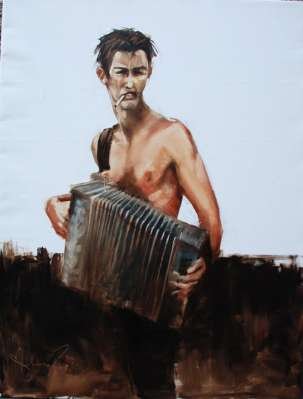
The Russian Glamour
The Russian Glamour by Igor Shulman presents a raw and magnetic portrait of individuality. Painted in 2007, this expressive oil painting captures a young man — bare-chested, cigarette between his lips, holding an accordion close as if it were an extension of himself. His posture is both relaxed and defiant, his eyes locked with the viewer’s, blurring the line between performance and confession.
Behind him stretches a stark, almost desolate background — a bleached-white expanse that isolates the figure and heightens the emotional tension. Beneath his feet, a dark, textural ground of browns and blacks anchors the composition, contrasting the luminosity of his skin. The emptiness around him feels deliberate: a stage stripped of artifice, leaving only the man and his music.
Shulman’s technique is direct and tactile. His brushwork remains visible, his palette restrained — warm flesh tones against cold neutrals. The instrument is rendered with worn precision, its age and use telling silent stories of nights spent playing, surviving, enduring.
The atmosphere is melancholic yet self-assured. There’s vulnerability in his bareness, but also strength — the quiet arrogance of someone who has found truth through imperfection. The cigarette, the accordion, the stare — all fuse into a symbol of unpolished authenticity.
Symbolically, The Russian Glamour explores the duality of pride and poverty, solitude and self-expression. The man becomes both a musician and a metaphor — a representation of endurance, raw beauty, and the timeless urge to create meaning through art.
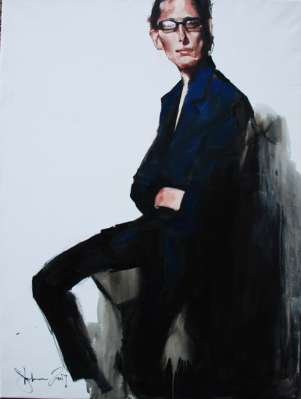
Mark
In Mark, Igor Shulman presents a poised figure seated with composed elegance. The subject, wearing a deep blue suit and glasses, projects quiet confidence and intellectual presence. Arms crossed, the posture communicates both self-containment and attentiveness, while the direct gaze engages the viewer, suggesting awareness and subtle authority.
The background is minimal, a stark white canvas that throws the figure into sharp relief. The chair is hinted at with a few strokes of gray and black, emphasizing the individual without distraction. Light falls selectively across the face and upper torso, creating dramatic contrasts that highlight the figure’s features and the structure of the suit, while the lower parts blend into softer shadow.
Shulman’s brushwork is expressive and deliberate, blending areas of precise detail with sections that remain intentionally loose, allowing the viewer’s imagination to complete the image. The limited palette of blues, blacks, and whites reinforces the modern and formal tone, while the visible strokes bring energy and immediacy to the portrait.
The mood is reflective and self-assured. There is a quiet intensity in the figure’s gaze, paired with a calm and composed stance that suggests both introspection and mastery of self-presentation. Symbolically, the suit represents authority and formal identity, while the relaxed pose and intellectual expression hint at individuality beneath societal expectations. Mark explores themes of personal presence, the negotiation of identity, and the subtle dynamics of power and perception in contemporary life, capturing the balance between external formality and internal poise.
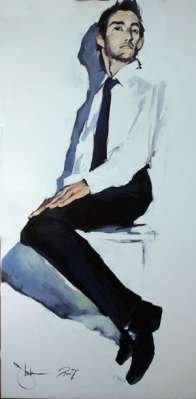
Portrait of a Clerk
39.37 H x 27.56 W x 1.97″ x / 100 H x 70 W x 5 cm
Portrait of a Clerk by Igor Shulman captures a young man at ease, seated in a formal yet relaxed pose. Dressed in a crisp white shirt, dark tie, and matching pants, he projects a blend of professionalism and casual confidence. One leg crosses over the other, and his hands rest naturally on his knee, while a slight smirk on his face hints at self-assurance and approachable demeanor. The painting emphasizes the character of the individual, rather than a strict likeness, allowing the subject’s personality to emerge organically.
The background is deliberately minimalistic, rendered in bright whites that give the composition a sense of openness and airiness. Subtle shadows on the wall and faint hints of a chair provide context without distracting from the central figure. This sparse environment draws attention to the man himself, reinforcing the theme of personal identity and presence within a contemporary space.
Shulman’s technique is expressive and immediate, with visible brushstrokes that convey movement and vitality. The selective palette, dominated by whites, blacks, and hints of blue, maintains cohesion while highlighting the contrast between the formal attire and the casual posture. Light interacts softly across the figure, accentuating contours and textures with a natural fluidity.
The painting’s mood is confident, relaxed, and modern. Symbolically, the work reflects the negotiation of professional and personal identity — the structured appearance of formal dress contrasts with the ease of body language, suggesting a harmony between societal expectations and individuality. Portrait of a Clerk invites viewers to consider contemporary self-expression, the subtleties of posture and demeanor, and the quiet strength inherent in self-possession.
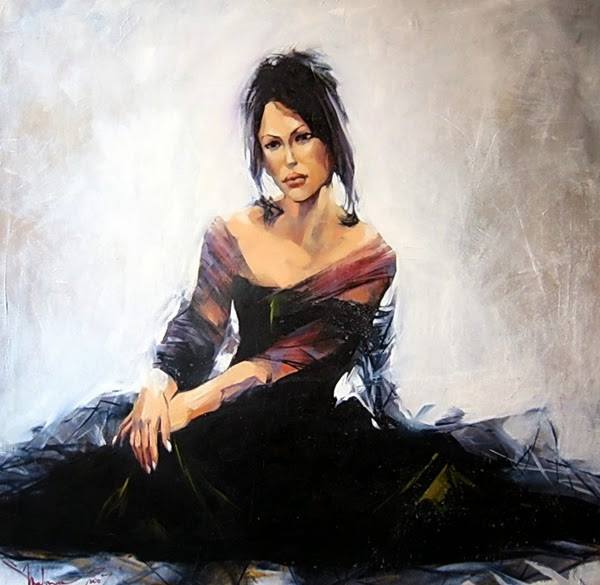
Untitled (The Ballet)
This original oil painting presents a solitary woman seated with quiet dignity, captured in a moment of introspection. The main subject is a dark-haired woman, her hair styled in a soft updo, dressed in a flowing black gown with subtle maroon drapery. Her hands rest gently in her lap, and her posture conveys both calm and contemplation. Her facial expression is delicate, hinting at inner thought or gentle melancholy, suggesting a private emotional world.
The setting is minimal, composed of a light gray-white background with soft, textured brushstrokes. The neutral tones allow the figure to remain the central focus while evoking a serene, almost ethereal atmosphere. Light is diffused across the canvas, casting soft highlights and subtle shadows that enhance the three-dimensionality of the form without creating harsh contrast.
Shulman employs a figurative style with impressionistic touches. The brushwork is expressive and fluid, capturing the form and mood rather than precise, photorealistic detail. The texture of the gown is suggested through layered strokes, conveying a sense of movement and the delicate quality of fabric.
The mood is contemplative, introspective, and quietly somber. There is a sense of solitude, with an emotional depth that invites reflection on the inner life of the subject. The black gown may symbolize mystery, sophistication, or the weight of thought, while the neutral background emphasizes the woman’s isolation and inner focus. The painting subtly explores themes of female introspection, emotional complexity, and the beauty of quiet reflection.
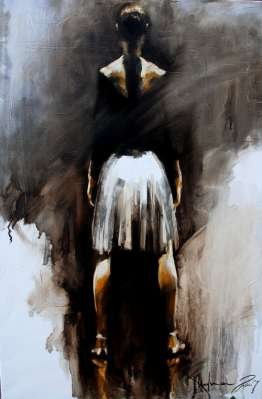
The Ballet (Start)
In The Ballet (Start), Igor Shulman presents a ballerina poised in a fleeting moment of reflection. Viewed from behind, she stands with an erect posture that conveys both discipline and subtle vulnerability. Her hair is neatly pulled up, and the line of her spine is softly emphasized, creating a sense of quiet tension and readiness. The white tutu, rendered with light, expressive brushstrokes, floats above the darker background, contrasting with the warm tones of her legs and suggesting both grace and strength.
The background is abstract, a wash of browns and grays that evokes backstage stillness or a dreamlike space. Shadows and muted light create an intimate atmosphere, isolating the figure and drawing attention to her internal state. The soft glow on her upper back and tutu forms a natural focal point, emphasizing the quiet drama of anticipation.
Shulman’s technique blends expressive realism with impressionistic influence. The loose, gestural strokes in the backdrop convey texture and movement, while the figure itself is more carefully delineated. Light and shadow interact fluidly, capturing the subtle interplay of form and mood rather than precise detail.
The painting’s emotional tenor is one of introspection and quiet anticipation. The ballerina’s solitary stance suggests resilience and self-possession, while the muted palette and soft edges underscore vulnerability. Symbolically, the dancer embodies dedication, discipline, and the pursuit of beauty through effort. Light highlights her presence, while shadow hints at the sacrifices and struggles underlying her poised exterior. The tutu’s white purity reinforces her grace and the timeless ideal of the ballerina.
Through The Ballet (Start), Shulman invites viewers into a private, contemplative space, capturing both the elegance and the quiet inner strength of the dancer in a single, expressive moment.
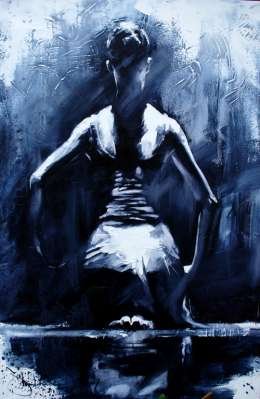
The Ballet (Pause)
39.37 H x 27.56 W x 1.97″ x / 100 H x 70 W x 5 cm
The Ballet (Pause) by Igor Shulman captures a solitary female figure in a moment of quiet stillness. Seen from behind, the ballerina stands near what appears to be a reflective surface, her arms gently extended, suggesting a balance between grace and vulnerability. The vertical lines of her dress accentuate the elegance of her posture, while the subtle tension in her stance evokes anticipation or contemplation.
The background is a swirl of blues and whites, abstract yet immersive, creating a sense of depth that hints at water or a mirrored surface beneath her feet. Light diffuses across the scene, casting soft, elongated shadows that enhance the dreamlike, introspective quality of the composition. The setting is intentionally undefined, allowing the viewer’s imagination to fill in the emotional context.
Shulman’s technique is expressive and fluid. Bold brushstrokes define the figure while blending seamlessly into the softer, more abstract background. The monochromatic palette emphasizes mood and emotional resonance over photorealistic detail, capturing the essence of the moment with an intuitive immediacy.
The mood is serene yet tinged with melancholy. The ballerina’s back turned to the viewer suggests introspection, a private reverie frozen in time. The reflective surface may symbolize self-examination or the transition between emotional states, while her solitary presence speaks to themes of isolation, contemplation, and the quiet strength found in moments of pause.
Through The Ballet (Pause), Shulman invites viewers into a space of introspective reflection, evoking both empathy and curiosity. The ambiguity of her stance and setting leaves room for personal interpretation, making the painting a quietly compelling meditation on human emotion and inner life.
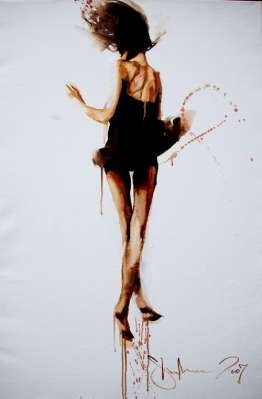
Butterfly
39.37 H x 27.56 W x 1.97″ x / 100 H x 70 W x 5 cm
Butterfly by Igor Shulman captures a fleeting moment of dynamic movement, portraying a woman seen from behind in mid-motion. Her dark hair blurs into a fluid mass, emphasizing speed and spontaneity, while her long, slender legs, depicted with flowing lines, convey elegance and grace. She stands poised on her toes in classic heels, her dark, loose garment accentuating both freedom and refined motion.
The background is stark and minimalist, a plain white canvas that allows the figure’s energy to dominate the composition. Sepia-toned splashes and drips radiate around her, enhancing the sense of movement and lending a spontaneous, almost improvisational quality to the work. This contrast between figure and background intensifies the drama of the scene, highlighting the interplay between inner vitality and the external void.
Shulman’s technique is expressive and gestural, reminiscent of watercolor or ink wash. Lines are intentionally blurred and loosely applied, encouraging the viewer’s eye to complete the motion. The brushwork conveys a rhythm and fluidity that mirrors the subject’s own energy, capturing not a precise moment but the sensation of movement itself.
The painting evokes freedom, dynamism, and subtle vulnerability. The woman’s movement can be interpreted as a personal expression, a release of energy, or a metaphorical escape. The splashes of paint symbolize bursts of emotion, creativity, and transformation, while the stark background suggests the contrast between individual vitality and external constraints.
Through Butterfly, Shulman celebrates motion, energy, and the human desire for self-expression, creating a vivid study of grace and emotional intensity in a single, expressive gesture.
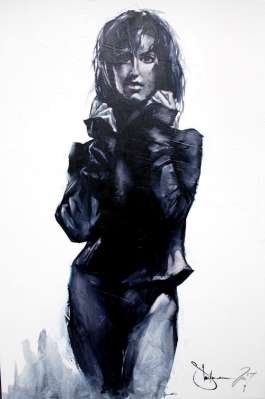
The Moscow
In The Moscow by Igor Shulman, a woman stands at the threshold of light and shadow, her presence commanding yet withdrawn. Dressed in a dark jacket pulled high around her neck, she meets the viewer with an expression that balances confidence and quiet sorrow. Her dark hair falls loosely across her face, obscuring one eye, and the faintest trace of tension gathers in her hand as it clutches the fabric near her collar. The gesture feels protective — a small act of self-containment against an unseen chill or emotional weight.
The setting is stripped of distraction: a soft, pale background that isolates the figure and heightens the contrast between her dark clothing and delicate features. The absence of context or environment turns the portrait inward, making her solitude almost palpable. Light glances across her cheek and hands, suggesting both fragility and endurance.
Shulman’s technique here reflects his signature figurative realism — expressive yet grounded in psychological truth. The visible brushwork, especially where the figure seems to merge into the blank background, lends a sense of impermanence, as though the woman could dissolve at any moment.
The atmosphere of The Moscow is introspective and restrained. It speaks of vulnerability held in tension with strength — the moment when one faces the world while guarding what remains unspoken. The dark jacket becomes a symbol of both protection and isolation, while her direct gaze invites empathy rather than pity. Shulman captures the quiet resilience of the human spirit, revealing strength within silence and dignity within uncertainty.
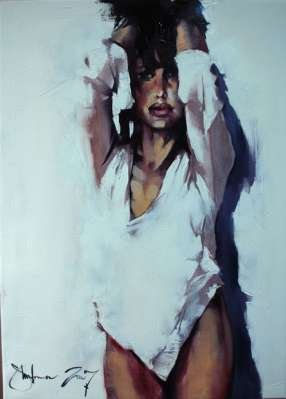
Marina
Marina by Igor Shulman captures a fleeting, intimate moment, portraying a woman caught in the raw display of her emotions. She wears an oversized white shirt, her dark hair tousled as she raises both hands to run her fingers through it. Her posture is simultaneously relaxed and restless, with an intensity in her parted lips and direct gaze that conveys both vulnerability and defiance. The figure dominates the composition, inviting the viewer into her private world.
The background is minimal, an off-white wall that allows the figure to remain the focal point. Diffused light softly illuminates the contours of her body and the folds of her shirt, while subtle shadows, particularly along her right side, provide depth and emphasize the physicality of her form. The restrained palette, focused on whites and warm skin tones, enhances the intimacy of the scene and reinforces the immediacy of the moment.
Shulman employs a loose, expressive brushstroke technique, with visible marks that give the painting energy and spontaneity. The contemporary realist style captures emotional truth rather than strict photographic detail, emphasizing the essence of the subject’s experience.
The painting evokes a sense of vulnerability, introspection, and emotional honesty. The white shirt symbolizes purity and simplicity, while the gesture of running her hands through her hair hints at frustration, contemplation, or an unguarded release. Marina explores the beauty of unposed, unedited human emotion, inviting viewers to witness a private, fleeting moment and to connect with the subject on a personal, empathetic level.
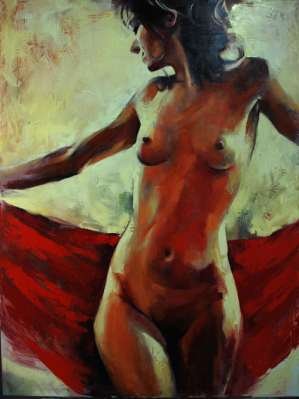
May Day
47.24 H x 35.43 W x 1.97″ x / 120 H x 90 W x 5 cm
In May Day, Igor Shulman presents a nude female figure enveloped in warm, earthy tones, captured in a moment of openness and subtle surrender. Seen from the chest up, the woman’s arms are outstretched, as if embracing the space around her or pausing in a quiet, contemplative gesture. Her face, slightly turned away, adds an element of mystery while maintaining an intimate connection through the body’s expressive posture.
The background is a soft wash of muted yellows and creams, diffusing light across the canvas and creating an ethereal atmosphere. Behind the figure, a gentle glow emphasizes the contours of her form, while a deep red fabric draped across the lower portion introduces a dramatic visual contrast, suggesting passion, vitality, or tension. The setting feels less like a physical location and more like a state of emotional presence, amplifying the painting’s introspective quality.
Shulman’s technique is expressive and tactile. Bold, visible brushstrokes convey the figure’s form and texture, while thickly applied paint adds depth and dimensionality. The work leans toward abstract expressionism, prioritizing emotional resonance over photorealistic detail.
The painting evokes vulnerability, openness, and quiet strength. The figure’s nudity symbolizes honesty and exposure, while the interplay of light and warm hues invites reflection on the human experience of self-awareness and courage. The red fabric punctuates the composition, suggesting both protection and the raw intensity of emotion.
May Day celebrates the beauty and complexity of the human form, embracing imperfection, introspection, and the quiet power found in vulnerability. The painting invites viewers to contemplate both physical presence and emotional depth in a single, evocative moment.
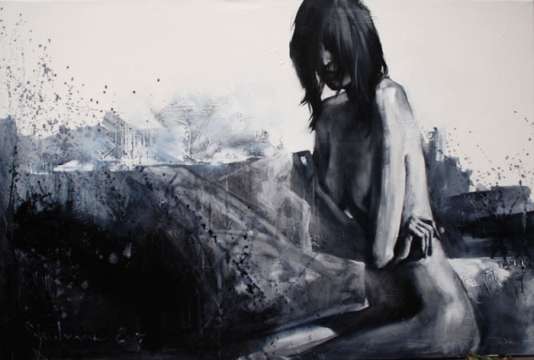
Akt N19
35.43 H x 47.24 W x 1.97″ x / 90 H x 120 W x 5 cm
In Akt N19, Igor Shulman portrays a solitary woman enveloped in a monochromatic palette of blacks, grays, and whites, captured in a moment of introspection. Seated or kneeling, her long dark hair obscures her face, while her arms curve protectively around her body, conveying both vulnerability and self-containment. The composition emphasizes the quiet intensity of her inner world, inviting the viewer to contemplate her thoughts and emotions.
The background is abstract and textural, composed of blurred strokes, smudges, and splashes of paint that evoke both stormy and dreamlike landscapes. Light and shadow interplay across the canvas, enhancing the sense of ambiguity and emotional tension. The contrast between the smooth rendering of the figure’s skin and the rough, gestural application of paint in the background deepens the expressive impact of the work.
Shulman’s style is expressive, leaning toward figurative expressionism. Loose, impasto-like brushwork communicates emotional resonance, prioritizing the essence of the subject’s experience over precise realism. The painting’s gestural quality conveys immediacy, as if the figure exists in a suspended, contemplative moment.
The mood is one of melancholy, reflection, and quiet vulnerability. The obscured face and withdrawn posture suggest the desire to retreat or shield oneself from the external world. Symbolically, the abstract backdrop mirrors the turbulence of the inner emotional landscape, while the figure embodies the universal human experience of navigating uncertainty, solitude, and introspection.
Through Akt N19, Shulman invites viewers into a deeply personal, meditative space, capturing the nuanced tension between isolation, vulnerability, and the search for emotional equilibrium.
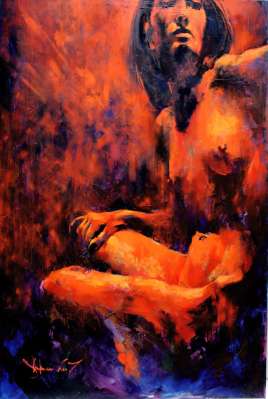
Akt N43
35.43 H x 47.24 W x 1.97″ x / 90 H x 120 W x 5 cm
Akt N43 by Igor Shulman presents a tender, intimate encounter between two intertwined figures, captured in a moment of shared vulnerability and emotional intensity. One figure reclines, head tilted upwards in apparent surrender, while the other stands or leans protectively above, their forms closely entwined. The features of the subjects are softly suggested through expressive brushwork, while warm, glowing tones emphasize the contours of their bodies, highlighting the intimacy of their connection.
The background is a dynamic swirl of fiery reds and oranges, punctuated by deep blues and purples. This vivid interplay of color heightens the painting’s emotional resonance, suggesting both passion and the complexities inherent in human relationships. The absence of a defined setting lends the scene a dreamlike quality, focusing attention entirely on the figures and their shared experience.
Shulman’s style is expressive and abstracted, employing bold, gestural brushstrokes and layered color to create depth and luminosity. The textures of the paint convey movement and energy, allowing the figures to seem almost alive, radiating warmth and vitality. The rich color contrasts reinforce the intensity of the emotions depicted.
The painting evokes tenderness, desire, and the vulnerability of human intimacy. The embrace symbolizes connection, unity, and the trust shared between two people, while the fiery palette conveys the intensity and passion of love. Simultaneously, the cooler tones hint at obstacles or emotional complexity, adding depth to the narrative.
Through Akt N43, Shulman explores the beauty and intensity of intimate human relationships, capturing a fleeting, emotional moment that is both personal and universally resonant.
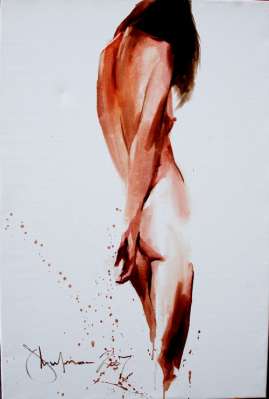
Akt №46
Akt №46 by Igor Shulman presents a solitary woman seen from the back, her head bowed and arms gently crossed behind her. Rendered in warm sepia tones, the painting captures the delicate curves and contours of the human form with elegant, flowing lines. The figure’s posture conveys quiet introspection, vulnerability, and a sense of serene self-reflection, inviting the viewer to contemplate the private inner life of the subject.
The setting is minimal and intentionally sparse, with a blank white background that emphasizes the figure’s isolation and presence. Subtle splatters and drips of brown pigment along the lower edge introduce a spontaneous, emotional quality, contrasting with the stillness of the composition. This simple backdrop enhances the ethereal and timeless quality of the painting, drawing attention to the form itself rather than any environmental context.
Shulman’s technique is expressive yet refined, using loose, flowing oil strokes reminiscent of watercolor fluidity. The gradations of brown tones allow for soft transitions between light and shadow, accentuating the subtle depth of the figure. The restrained palette and minimalist approach create a meditative atmosphere, where vulnerability and strength coexist in balance.
The painting evokes a mood of introspection, quiet contemplation, and gentle intimacy. The bare back symbolizes openness and self-awareness, while the figure’s bowed head hints at reflection or inward focus. The earth-toned palette reinforces naturalness and the raw beauty of the human body, while the expressive drips convey emotion and spontaneity.
Through Akt №46, Shulman celebrates the nuanced beauty of solitude, the elegance of the human form, and the profound emotional resonance of quiet, introspective moments.
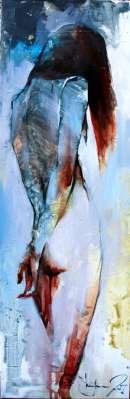
Akt №47
Akt №47 by Igor Shulman presents a solitary female figure, viewed from behind, captured in a quiet moment of introspection. The figure appears nude or lightly clothed, her slender body rendered with flowing, indistinct lines. Dark hair cascades down her back, merging subtly with shades of blues and grays. Her arms hang loosely at her sides, and the posture conveys vulnerability, resignation, and a delicate sense of fragility.
The background is an abstract wash of soft blues, whites, and hints of warmer yellow tones. Colors blend seamlessly, creating an ethereal and dreamlike space devoid of specific setting. Diffused light enhances the softness of the composition, while visible brushstrokes add texture and depth. This abstract environment amplifies the focus on the figure’s emotional state rather than a physical location.
Shulman’s style combines expressive and impressionistic elements, using loose, gestural brushwork to convey mood and atmosphere over strict realism. The blending of colors and softened contours evoke a fleeting, transient moment, emphasizing the inner emotional landscape of the subject.
The painting’s mood is contemplative and introspective. The muted palette, gentle light, and inward posture of the figure create a sense of quiet solitude and private reflection. Symbolically, the work explores vulnerability, isolation, and the ephemeral nature of human experience. The absence of a defined environment suggests a journey into the self, while the blurred lines and soft tones mirror the ambiguity and transience of emotions and memories.
Through Akt №47, Shulman captures the delicate interplay between human fragility and introspective resilience, offering viewers a meditative and emotionally resonant experience.
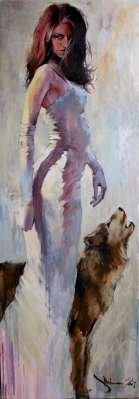
With Woolf
70.87 H x 23.62 W x 1.97″ x / 180 H x 60 W x 5 cm
With Woolf by Igor Shulman captures a timeless dialogue between the human and the untamed. Painted in 2007, this expressive oil on canvas measures 180 by 60 cm, immersing viewers in a vertical composition filled with silent intensity.
At its center stands a woman — graceful yet strong, her long pale dress contrasting with the deep tones around her. Her face is half-shadowed, and her posture both open and guarded, embodying the tension between vulnerability and inner power. Beside her, a wolf lifts its head in mid-howl, its presence pulsing with raw, natural energy. The pairing feels instinctive rather than decorative — two beings bound by an invisible understanding.
The setting is undefined, built from soft gradients of gray, white, and faded pastel tones. It suggests neither forest nor city but a threshold — a liminal space between the human world and the wild. Shulman’s brushwork is loose and gestural, emphasizing emotion over detail. Layers of oil create texture and movement, allowing light to shift across the figures like passing thought.
Emotionally, the painting vibrates with calm ferocity. The wolf’s howl carries both freedom and longing; the woman’s stillness, quiet strength. Together they speak of balance — instinct meeting awareness, nature mirrored in consciousness.
With Woolf reflects Shulman’s enduring fascination with human emotion, solitude, and the silent connection between beings. It is a meditation on duality — civilization and wilderness, restraint and release — harmonized within one haunting moment.
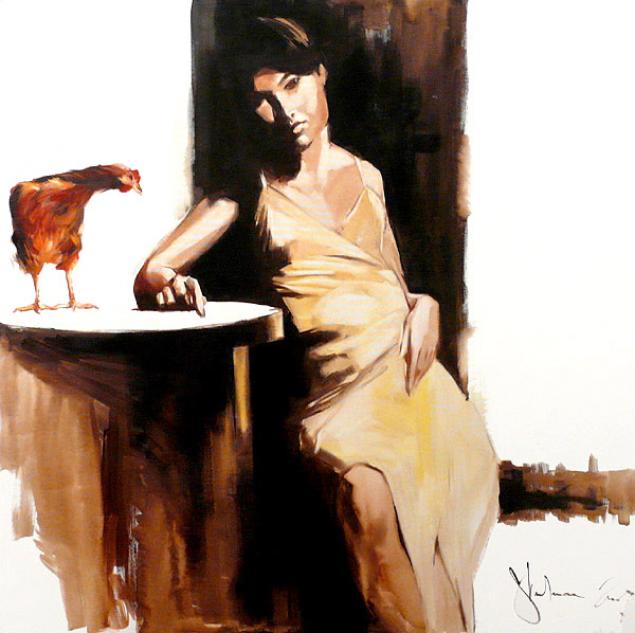
Untitled (Whispered Solitude)
39.37 H x 39.37 W x 1.97″ x / 100 H x 100 W x 5 cm
Untitled (Whispered Solitude) by Igor Shulman presents a quiet, intimate moment between a young woman and a rooster. The woman, seated at a small round table, wears a pale yellow dress that drapes gently over her form. Her dark hair is pulled back, and her expression is thoughtful, almost melancholic. Her warm, earthy skin tones contrast softly with the lighter areas of her dress, creating a gentle focus on her figure.
The rooster stands nearby, its reddish-brown plumage detailed and alert, providing a subtle counterpoint to the stillness of the woman. The table between them acts as a visual anchor, connecting the two figures in a silent, almost narrative interaction.
The background is muted, dominated by dark browns and blacks, suggesting a dimly lit indoor space. Soft, diffused light illuminates the woman and the rooster, while the textures of the surroundings remain implied rather than overtly detailed. This creates a controlled, contemplative atmosphere that emphasizes stillness and introspection.
Shulman’s technique combines realism with touches of Impressionism. Visible brushstrokes lend texture to the background, while the woman’s form is rendered with careful attention to light and volume. The soft, earthy palette reinforces the mood of quiet contemplation, while the interplay of light and shadow gives the painting depth.
The overall mood is introspective and subdued. The juxtaposition of the pensive woman and the vigilant rooster invites reflection on solitude, inner life, and the unexpected contrasts within daily existence. The painting explores themes of isolation, contemplation, and the complex relationship between humanity and nature.
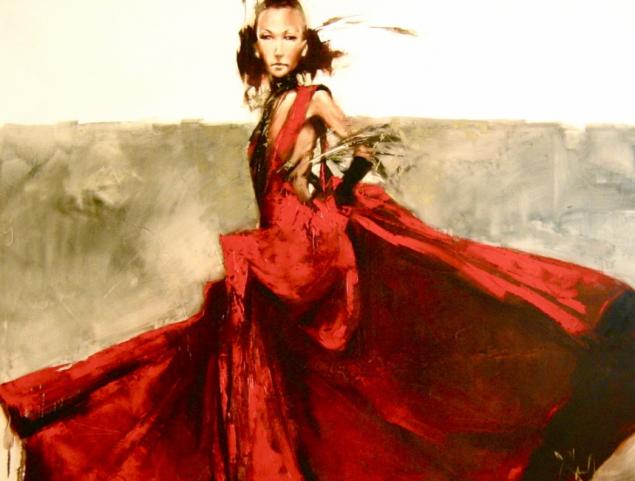
Untitled (Red Ascendancy)
The painting captures a woman in mid-stride, her flowing red dress swirling around her, embodying movement and energy. Positioned slightly off-center, she gazes forward with an expression that balances strength and quiet melancholy. Her dark hair, slightly windblown, reinforces the sense of motion, while the red dress dominates the canvas, its folds and wrinkles painted with bold, expressive strokes. The dress seems to extend her persona, symbolizing freedom, emotion, and confidence.
The background is muted and indistinct, with gray and beige tones suggesting a vast, open landscape. Its rough texture contrasts with the fluidity of the dress, emphasizing the figure’s dynamism. Soft, diffused light washes over the scene, enhancing the sense of movement and open space.
Shulman’s style combines expressive and impressionistic techniques. Visible brushstrokes convey motion and energy, while the blending of rich, bold colors allows for subtle transitions. The figure is recognizable, yet not meticulously detailed, creating a balance between realism and abstraction that prioritizes mood over precision.
The painting evokes feelings of liberation, vitality, and quiet intensity. The woman’s posture and forward gaze suggest determination and exploration, while the swirling dress embodies passion and emotional force. Symbolically, the red garment represents energy, power, and freedom, and the expansive, neutral background hints at possibilities and openness. The piece captures a fleeting moment of movement and inner strength, celebrating feminine dynamism and presence.
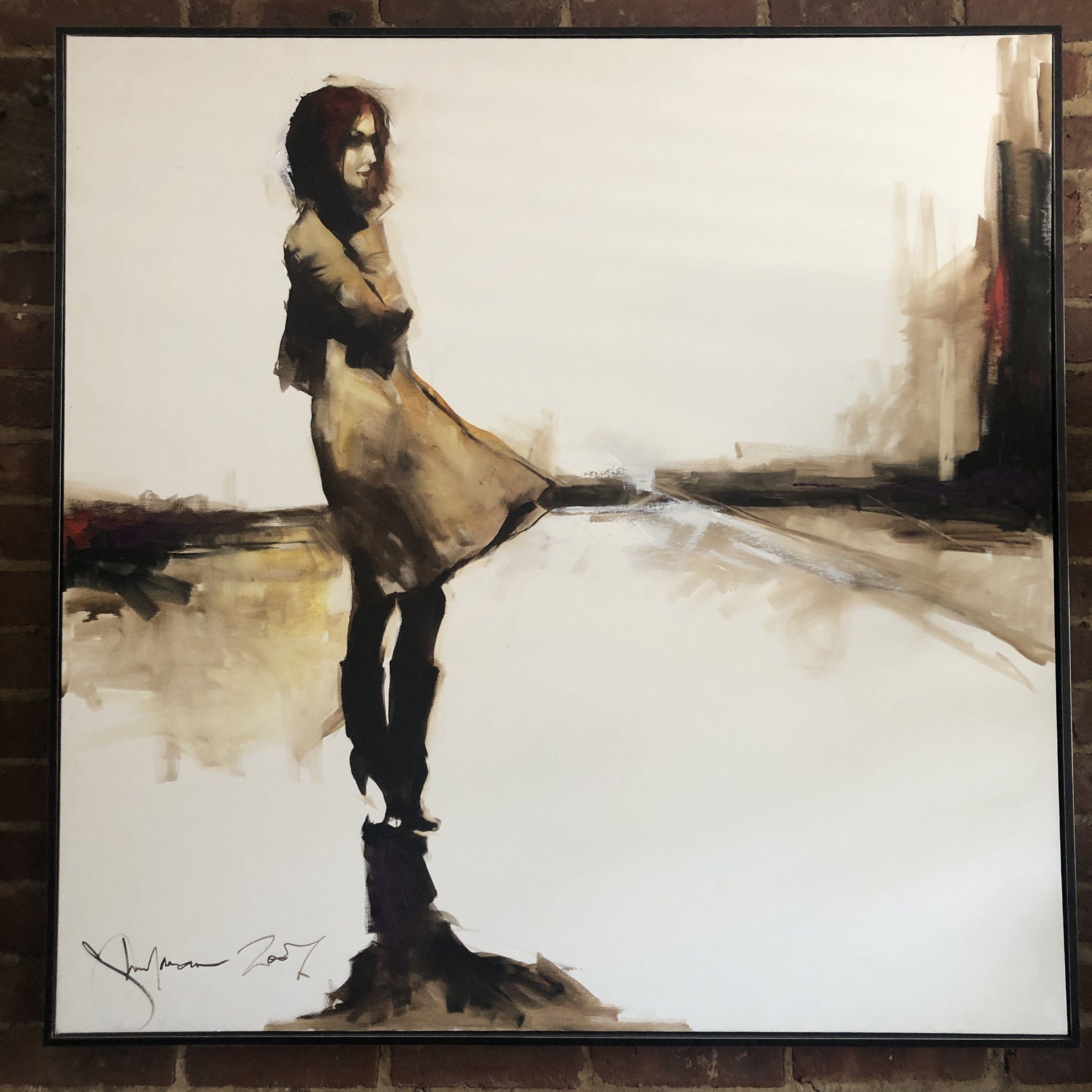
Untitled (Between Streets and Thoughts)
35.43 H x 35.43 W x 1.97″ x / 90 H x 90 W x 5 cm
Read more about where this painting is located now. Some pictures...
Untitled (Between Streets and Thoughts) by Igor Shulman offers a moment of quiet reflection suspended in the rhythm of a city. A woman stands alone, arms folded across her chest, poised somewhere between confidence and contemplation. Her gaze turns slightly upward, as if searching for an answer in the blur of thoughts that surround her. The muted palette — soft browns, deep blacks, and pale grays — shapes a space that feels both urban and dreamlike.
The city here is not defined by architecture but by atmosphere. Shulman lets the background dissolve into painterly abstraction, suggesting the texture of streets and walls without fully revealing them. It is Prague — or perhaps any city where solitude can be felt amid motion. The light brushes gently across the figure’s silhouette, heightening the sense of distance between her inner and outer worlds.
Executed in Shulman’s signature figurative realism, the painting balances precision and looseness. Visible strokes and fluid transitions create a surface alive with emotion. The artist’s sensitivity to posture and gesture transforms a simple stance into a psychological portrait.
The theme is quiet resilience — the strength found in stillness. The woman’s isolation is not sadness but self-possession, a pause between streets and thoughts. Shulman invites the viewer to linger there too, in that fleeting moment when the city fades and reflection begins.
Some archived artworks may be available as prints upon request. Learn more.